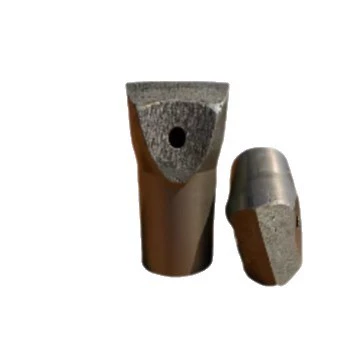
Product Description
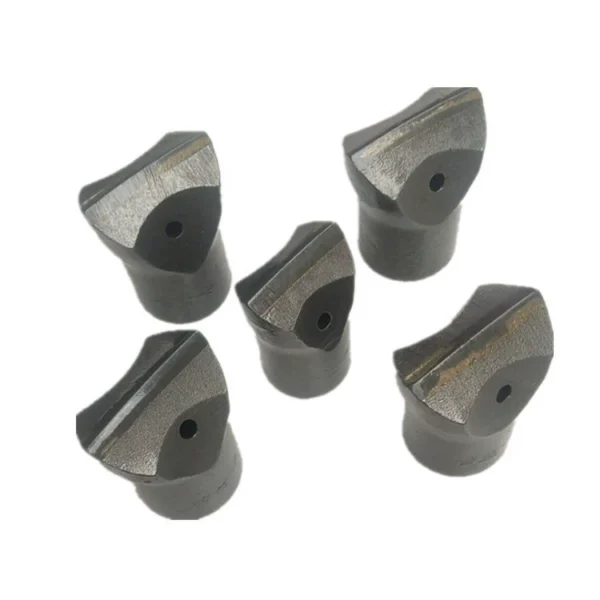
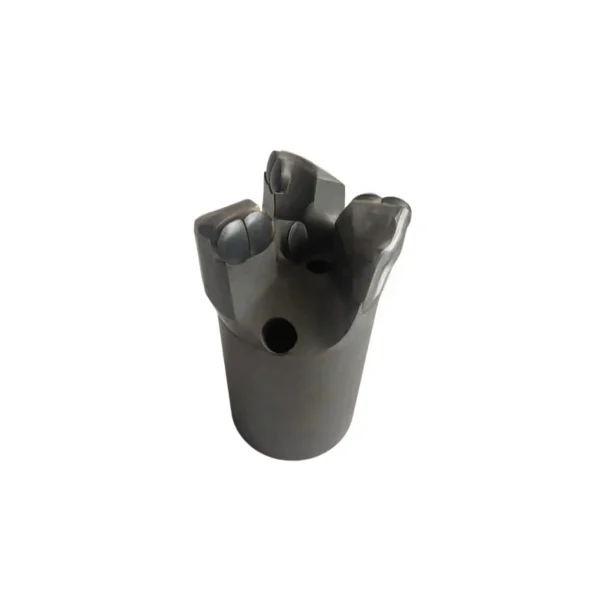
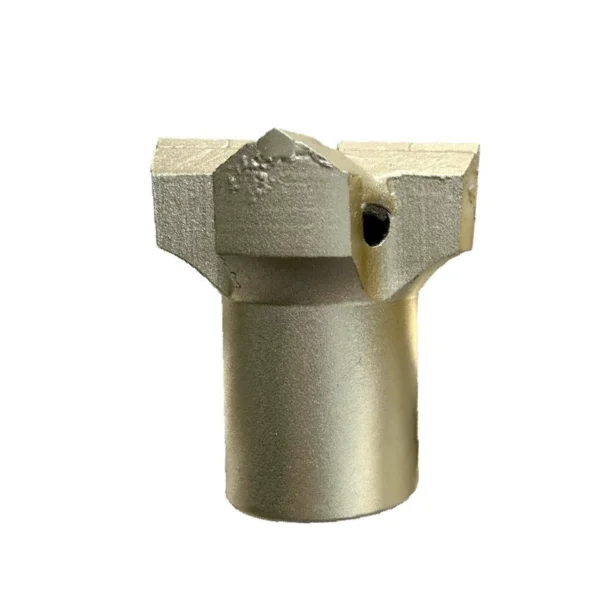
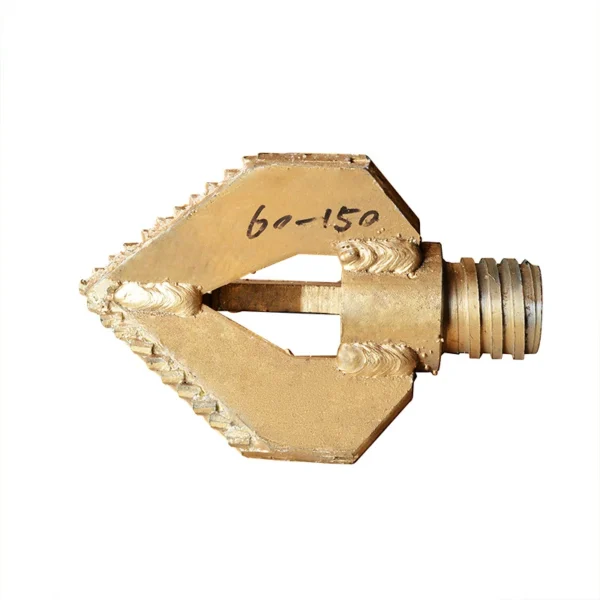
This one-word alloy drag-bit family lists 28, 30, 42, and 50 mm faces, covering 1.10–1.97 in for soft mining and pneumatic drilling. The straight fixed edge is intended to scrape and chip weak ground without cones or a multi-button crown. Its application can be compared in the mining exploration archive, and the suitable material class is shown in the soft formation archive.
The source filename describes an alloy cutting head but does not name the precise carbide grade or rod connection. Inspect the leading edge for uniform support and verify the measured face diameter before use. A one-word profile concentrates contact on a narrow line, so edge straightness and gauge are important. The family has no IADC code, bearing, or cone. Connection fit must be established separately from the 28–50 mm cutting range. Compare the two ends of the straight edge against a reference before installation; unequal height can steer the hole, overload one corner, and create misleading wear on only half of the face.
Operate at low WOB and 100–250 RPM. Add feed gradually while the bit produces a steady torque response and clears cuttings. This design has a firm limitation: it is not suitable for hard granite, basalt, or quartzite, and quartz above 20% can accelerate edge wear. General mineral and rock references are available from the U.S. Geological Survey. Repeated impact, chipping, or stalled penetration is a reason to change to a button bit, not to exceed the drag operating intent. Log the installed diameter.