
Nexa Resources Maps Larger Exploration Drilling Push for 2026
Key Data Points
This story is anchored to specific dates or periods such as 2026 and 2025. Those reference points make it easier to track how the situation develops over time.
- Date / period: 2026 Nexa Resources Maps Larger Exploration Drilling Push for 2026 Nexa Resources (NYSE: NEXA) has outlined an enlarged exploration drilling program for 2026, signaling confidence in its geological prospects and a commitment to…
- Date / period: 2025 The first tangible checkpoint may come with the company’s full-year 2025 exploration results, which often preview the following year’s strategy.
Securing long-term mineral supply begins deep underground—often years before metal reaches the market. Exploration drilling forms the critical upstream link in the mining supply chain, converting geological promise into proven reserves that underpin investment decisions and production forecasts. When producers expand their drill programs, signals ripple through procurement, equipment supply, and resource reporting networks.
Nexa Resources (NYSE: NEXA) is strengthening that upstream link with an expanded exploration drilling plan targeted for 2026. The Latin American zinc and copper miner, already active across multiple jurisdictions, is allocating additional effort to define new mineralized zones and upgrade existing resources. The longer lead time reflects the capital-intensive nature of systematic drill-out campaigns and the company’s own permitting and logistics horizon.
The announcement, first reported by Stock Titan, did not disclose specific meterage or newly budgeted sums. Yet the simple signal—a commitment to a larger drilling program—speaks to confidence in the geological potential of the company’s land holdings and to a commodity demand outlook that rewards resource growth.
Market context
Zinc and copper markets are entering a period of structural tightening. Both metals feature heavily in renewable energy infrastructure, grid modernization, and electric vehicle manufacturing. For producers, proving up additional tonnes becomes a competitive advantage. Exploration success can extend mine life, delay closure costs, and increase asset valuations.
Nexa operates mines and smelters primarily in Peru and Brazil, with exploration interests stretching across the Americas. A larger 2026 drill plan feeds into a pipeline that ultimately supports production continuity at sites such as Cerro Lindo, Vazante, and Atacocha. Analysts view any increase in exploration activity as a leading indicator of management’s faith in organic growth.
Drilling services companies and consumable suppliers also read these moves carefully. An expanded program means more rigs, more meters of core, and more demand for bits, rods, and sampling materials—a modest but measurable pull on the mining equipment supply chain.
Technical and standards considerations
When a public company expands an exploration campaign, it implicitly commits to the reporting standards that govern resource disclosure. Nexa, listed on the New York Stock Exchange, must align with regulations such as the U.S. SEC’s S-K 1300 or, in other jurisdictions, NI 43-101 or JORC. These frameworks require rigorous data collection, quality assurance, and transparent classification of mineral resources.
Drill core recovery, assay protocols, and geological modeling all come under heightened scrutiny when program scale increases. Field planning must balance step-out drilling—targeting extensions of known orebodies—with greenfield exploration on untested anomalies. The technical complexity grows with depth and terrain, demanding advanced rigs and experienced crews.
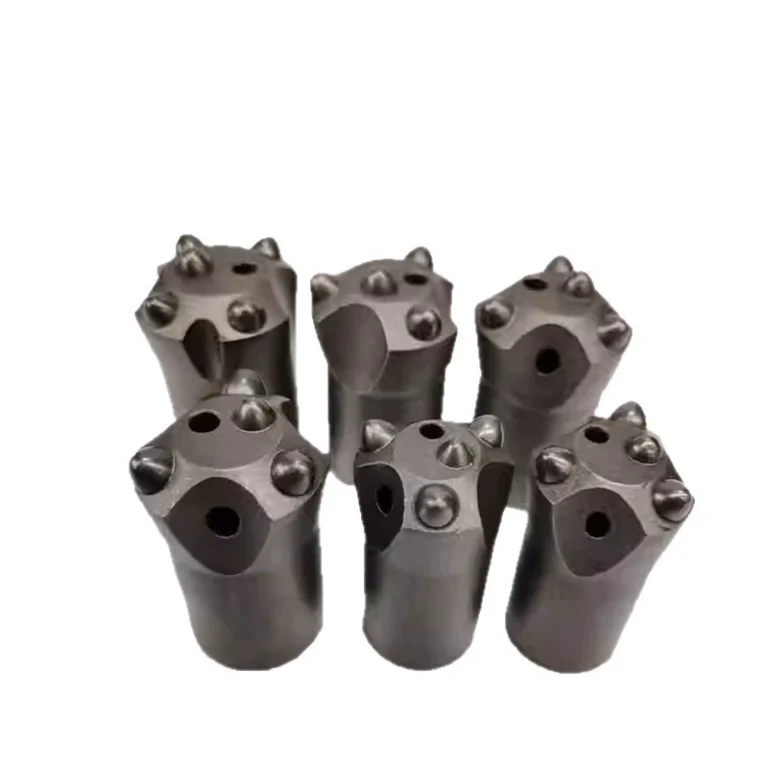
From a procurement standpoint, standard drill bit designs and tapered connection specifications (such as 32 mm, 38 mm, or 40 mm button bits) remain the industry backbone for underground and surface exploration. While Nexa’s specific tooling choices were not disclosed, the broader sector trend favors hardened alloy and carbide-tipped bits that can withstand the variable ground conditions typical of the Andes and Brazilian cratons.
What to watch next
Investors and supply chain participants will look for the next level of detail: target formations, drill hole counts, total meters planned, and any primary commodity focus. Nexa typically provides such granularity in its annual reporting cycle or during investor-day presentations. The first tangible checkpoint may come with the company’s full-year 2025 exploration results, which often preview the following year’s strategy.
Field execution will also be monitored for any shifts in regional emphasis. Peru’s exploration pipeline has faced permitting bottlenecks, while Brazil’s mining code reforms have aimed to streamline approvals. How Nexa allocates its 2026 drilling across these jurisdictions will reveal much about its operational priorities.
Until concrete data emerges, the expanded plan stands as a directional signal—one that tightens the link between today’s capital allocation and tomorrow’s metal supply.
| Aspect | Details |
|---|---|
| Company | Nexa Resources |
| Exchange | NYSE: NEXA |
| Announcement | Expansion of exploration drilling plan |
| Target year | 2026 |
| Core commodities | Zinc, copper, lead |
| Significance | Signal of organic growth confidence, potential resource base increase |
| Next likely update | Full-year 2025 exploration results or investor presentations |
Why This Matters
Nexa’s decision to expand exploration drilling underscores the mining industry’s need to continuously replenish resources amid tightening zinc and copper markets. By advancing the technical pipeline now, the company aims to secure future production, support asset valuations, and strengthen its position in supply chains critical to the energy transition. The move also implies increased demand for drilling services and consumables, offering a modest boost to equipment suppliers.
FAQ
Who is Nexa Resources?
Nexa Resources is a Latin American mining and smelting company listed on the New York Stock Exchange under the ticker NEXA. It primarily produces zinc, copper, and lead, with operations in Peru and Brazil and exploration activities across the Americas.
What does the expanded 2026 exploration plan entail?
While specific details such as total meters or budget have not been disclosed, the plan indicates a larger drilling campaign than previously anticipated. The expansion aims to identify new mineralized zones and upgrade existing resource estimates to sustain future production.
Why is this expansion significant for mining supply chains?
Exploration drilling is the first step in adding reserves that eventually feed smelters and refineries. A bigger program can help offset declining ore grades and extend mine life, ensuring a steadier flow of metal into global supply chains.
When will more details about the drilling program be available?
Nexa typically reports exploration results and forward plans in its annual filings or investor presentations. The next concrete checkpoint is likely the release of full-year 2025 exploration results, which may include a preview of the 2026 strategy.
Sources
- Nexa Resources (nexaresources.com)
- New York Stock Exchange (nyse.com)
Source: Stock Titan