
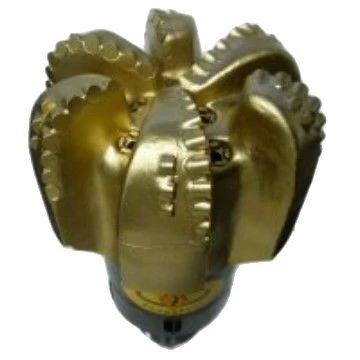
An 8.5-inch directional section in soft or consolidated rock normally favors PDC, while tricone offers a formation-coded alternative where rolling action or impact tolerance is needed. Select the bit with the steering objective, keep PDC at 2,000–10,000 lbf/in and 60–300 RPM, and anticipate response changes in interbedded ground.
How does the planned trajectory influence bit selection?
A directional bit must remove rock while supporting controlled toolface and predictable response. Formation compatibility remains the first gate. Clay, shale, and unconsolidated sand fall in the Soft class below 4,000 psi. Consolidated formation means well-cemented sedimentary rock. Interbedded formation alternates soft and hard layers, creating repeated changes in cutting resistance along the trajectory.
Directional PDC selection covers Soft, Medium, and Consolidated formations under the stated compatibility table. Its continuous shearing action can provide a consistent response when cutters remain engaged. The limitation is gravel: PDC is not assigned to gravel-rich unconsolidated intervals. Loose particles can interrupt stable cutting and expose the face to impact.
Tricone is also approved for directional work and can cover all formations through IADC selection. Milled-tooth 111, 121, or 131 belongs to Soft rock. Insert 437 or 447 belongs to Medium, 537 or 547 to Medium-Hard, and 637 to Hard. Compare the expected interval with the soft formation steering conditions before choosing the structure.
What parameter window belongs to each bit family?
PDC uses 2,000–10,000 lbf/in WOB and 60–300 RPM. For an 8.5-inch-class hole, circulation is 250–650 gpm. In directional work, these figures describe the allowed envelope, not a command to operate at the maximum. Stable torque and toolface response should be maintained while load and rotary speed are adjusted.
Tricone uses 3,000–8,000 lbf/in WOB and 60–120 RPM. The IADC structure must remain consistent with formation strength. No tricone flow figure is supplied, so hydraulics must be established by the directional program. Substituting the PDC 8.5-inch flow range would combine data from different cutting actions without support.
| Trajectory drilling option | Rock assignment | Mechanical envelope | Identification rule |
|---|---|---|---|
| PDC | Soft, Medium, Consolidated; avoid gravel | 2,000–10,000 lbf/in; 60–300 RPM | IADC M323/M332/M433/S323 only |
| Milled-tooth tricone | Soft | 3,000–8,000 lbf/in; 60–120 RPM | 111/121/131 |
| Insert tricone | Medium through Hard | 3,000–8,000 lbf/in; 60–120 RPM | 437/447, 537/547, or 637 |
Why are interbedded intervals difficult to steer?
A bit can leave a soft bed and meet a harder band at an angle. One side of the face may enter the stronger material before the other, changing torque and lateral response. When the bit exits the band, the stored control setting may become too aggressive for the softer layer. The result can be an irregular trajectory response even though average formation data appears acceptable.
Use the interbedded directional selection guide to keep the alternating-bed risk visible. Parameter changes should follow observed transitions rather than a fixed depth schedule alone. If a PDC face becomes unstable, adding WOB can increase cutter impact. If a tricone code is too soft for the harder bed, higher load does not correct the structural mismatch.
The consolidated formation reference is useful when cemented sedimentary rock dominates the interval. PDC remains compatible there, but the recommendation should still name any interbedded sections and gravel exclusions. A single broad label can conceal the part of the trajectory most likely to disturb steering response.
Which dysfunctions point to a poor match?
Erratic torque, lateral vibration, and chipped PDC cutters can indicate unstable engagement or impact at a bed boundary. Balling in soft shale points toward face cleaning and material adhesion. Uneven tricone wear can identify inappropriate structure or loading. A directional tendency that changes with lithology deserves a formation review before steering hardware is blamed.
Capture depth, toolface behavior, WOB, RPM, circulation where applicable, and returned lithology together. The sequence matters. A response change immediately after entering a hard band has a different interpretation from one following a large rotary adjustment. Keep PDC within 2,000–10,000 lbf/in, 60–300 RPM, and the stated 250–650 gpm 8.5-inch flow range during diagnosis.
Directional and bit-mechanics concepts can be reviewed at PetroWiki. Official IADC context is available from IADC. These references support terminology, while the formation log and directional program control the actual run.
Gauge behavior should be included in steering review. Shoulder or outer-cutter wear can change wall contact before the average penetration rate falls. Compare recovered gauge measurements with the depths where toolface response became less stable. If the change follows a hard band, revise both the transition settings and the gauge-protection choice.
Connection verification is separate from bit diameter. API Reg 2-3/8″, 3-1/2″, and 4-1/2″ are identified connection families for PDC and tricone equipment, but the actual selection must match the supported assembly. A connection mismatch can generate vibration that resembles lithology-driven dysfunction.
How should the directional recommendation be approved?
State the steering objective, hole class, expected formations, bit family, cutting structure, connection, operating envelope, and known exclusions. PDC IADC entries must be limited to M323, M332, M433, or S323. Tricone entries must use the formation-coded list. The listed PDC and tricone connection sizes are API Reg 2-3/8″, 3-1/2″, and 4-1/2″.
Add transition actions. An interbedded entry should tell the crew to monitor response as each harder band is entered and exited. A gravel indication should trigger reconsideration of PDC. This does not guarantee directional performance, but it creates an auditable relationship between geology, structure, and settings. Record recovered gauge and connection before approving the next run.