
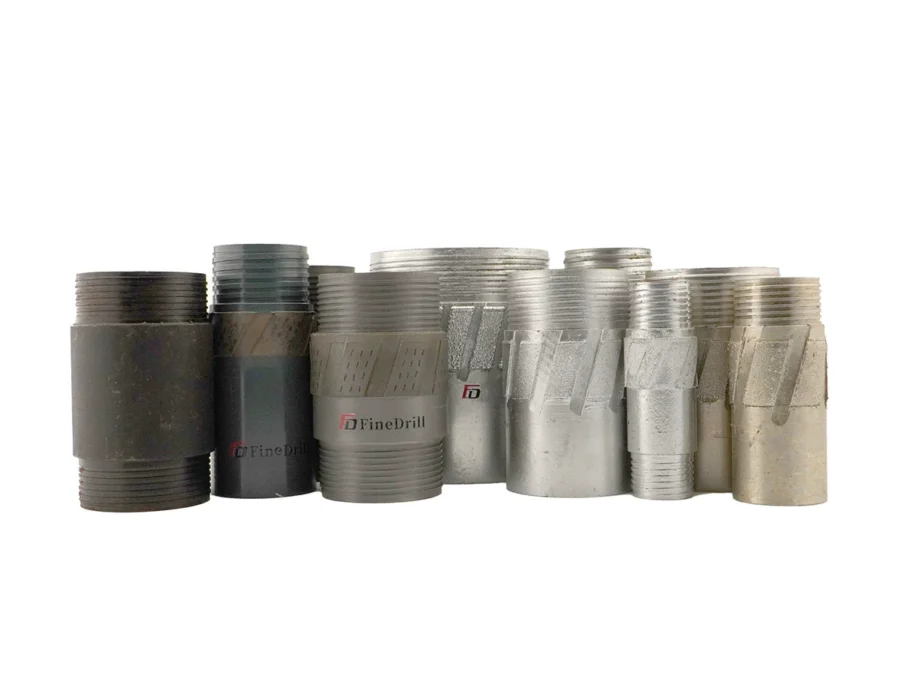
A 2-3/8-inch API Reg connection may identify oilfield hardware, but a well-workover cutting tool must be chosen from the actual obstruction and surrounding formation. Milling and workover bits are the approved families for intervention. Their WOB, RPM, and flow must come from the job procedure because no universal milling range is stated.
What information must be known before a workover run?
A workover selection begins with the object to be removed, the well geometry, the connection, and the material around the target. The cutting tool may face a plug, deposited material, or a transition into formation. Milling and workover bits are assigned to well-workover service. That application match does not remove the need to verify the obstruction profile and the planned retrieval or circulation path.
Formation labels still help define the surrounding rock. Consolidated formation is well-cemented sedimentary rock. Interbedded formation alternates soft and hard layers. If the assembly may contact formation after clearing an obstruction, these conditions affect stability and wear. Review the consolidated interval characteristics and the interbedded response changes before finalizing the run.
The main limitation is the available parameter evidence. No numeric WOB, RPM, or flow window is supplied for milling or generic workover bits. A professional recommendation must state that boundary. PDC and tricone ranges belong to those drilling types and cannot be copied into a mill program simply to fill a specification field.
How should connection and tool geometry be verified?
For PDC and tricone equipment, the listed connection family comprises API Reg 2-3/8″, 3-1/2″, and 4-1/2″. A workover assembly may include other job-specific interfaces, so the connection must be checked against the actual string and tool drawing. Do not infer a thread from the casing size, obstruction diameter, or a photograph.
Geometry should preserve clearance for circulation and recovered debris while maintaining controlled contact. The data set does not provide blade count, cutter count, or clearance dimensions for milling tools. Those values must remain absent until verified from the selected product. This is preferable to presenting an attractive but unsupported specification.
| Workover planning item | Verified fact | Selection consequence |
|---|---|---|
| Application family | Milling and workover bits fit well-workover | Choose within those intervention families |
| Adjacent cemented rock | Consolidated means well-cemented sedimentary rock | Plan for possible formation contact |
| Alternating beds | Interbedded means soft-hard alternation | Expect changing cutting response |
| Operating settings | No milling WOB, RPM, or flow range is stated | Use the approved workover procedure |
Why is debris removal part of the bit decision?
A cutting structure can only continue working when fragments leave the contact zone. Recut material raises wear and can obscure the true response of the tool. The workover plan should therefore connect the selected geometry with circulation, capture, and retrieval. Since no universal flow figure is supplied, the required value must be established by the well-specific hydraulic program.
Watch returns for changes in fragment type and quantity. A move from obstruction debris to formation cuttings can signal that the target has been cleared. Continuing with the same contact strategy may then damage surrounding material or enlarge the interval unintentionally. The crew needs a defined stopping or reassessment trigger, not a promise that one tool can mill every material.
The plug milling application archive is relevant when the workover target is a plug. It keeps the intervention objective separate from general formation drilling. That distinction supports better records and prevents PDC, tricone, or button parameters from being transferred into a milling operation without technical approval.
Which failure patterns call for a pause?
Erratic torque can indicate intermittent contact, changing debris, or an off-center tool. Falling advance with repeated fragments may indicate recutting or poor removal. Uneven wear suggests that the face is not loading uniformly. A sudden change after the obstruction is cleared can mark contact with Consolidated or Interbedded formation. Each condition warrants inspection of returns and operating history before more load is applied.
Do not state a fixed completion time, footage life, stock quantity, or delivery promise. Workover results depend on the actual obstruction and well condition. Availability, if recorded elsewhere, is limited to “Made to order” or “Ships from stock, subject to confirmation.” Those are supply statements, not performance guarantees.
General drilling and intervention concepts can be reviewed through PetroWiki. Thread and equipment standards information is available from the American Petroleum Institute. The final procedure remains controlled by the verified well program.
Tool recovery deserves its own decision point. If the returned debris no longer matches the obstruction, circulate and verify depth before continuing contact. Photograph the recovered face, measure its working diameter, and record any one-sided damage. Those observations show whether the geometry remained centered or began cutting surrounding material.
Keep the formation terms separate from the intervention target. Consolidated or Interbedded describes rock that may be exposed after removal; it does not identify the plug, scale, or other obstruction. Writing both items in the program prevents the crew from mistaking formation contact for incomplete milling.
How can the workover recommendation be audited?
Write down the target, expected material, maximum tool envelope, verified connection, selected milling or workover family, debris route, and stop criteria. Separate known facts from values that require program approval. If formation contact is possible, identify whether the surrounding interval is Consolidated or Interbedded and explain how a response change will be recognized.
Leave unsupported WOB, RPM, and flow values blank in the product specification. The honest limitation is explicit: the approved application mapping identifies the tool family, but it does not supply a universal intervention parameter window. A job-specific procedure must fill that gap before the run. This approach prevents a drilling range from being misrepresented as a milling range.