38 mm 35CrMoV Ball-Tooth Bit for Mining

38 mm 35CrMoV Ball-Tooth Bit for Mining

38 mm 35CrMoV Ball-Tooth Bit for Mining

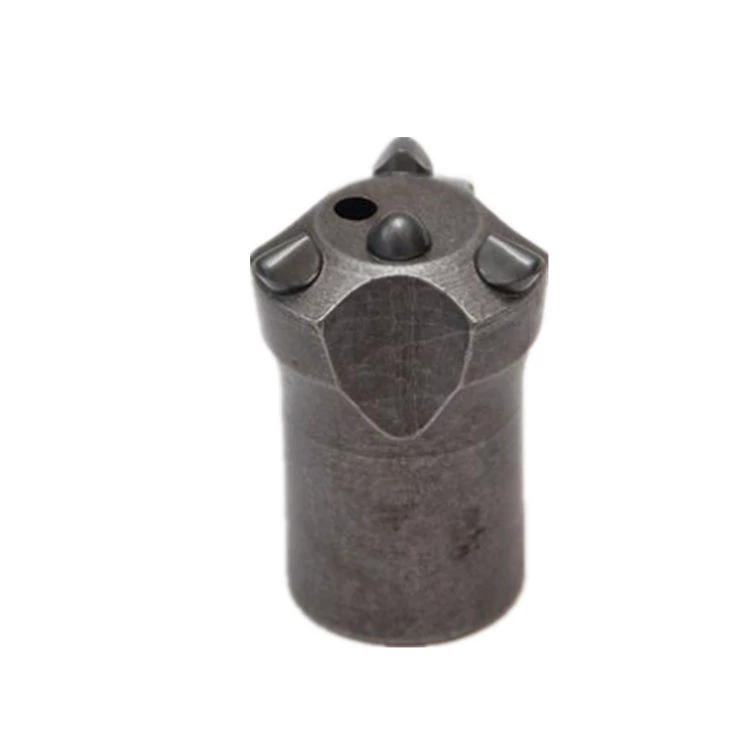
A 38 mm cold-pressed 35CrMoV ball-tooth bit for mining rock, with hardness, connection, and face layout verified.

Request Pricing

Technical Specifications

Model / Series38-35CrMoV Ball-Tooth
Size Range (in / mm)38 mm (1.50 in)
Body Material (matrix / steel)35CrMoV alloy steel body; heat treatment not stated
Cutter / Insert / Tooth ConfigurationCold-pressed carbide ball-tooth inserts; count not stated
Blades / ConesFixed button face; profile not stated
API ConnectionNot stated; verify drill rod interface
Circulation / Nozzle PortsFlushing arrangement not stated
Bearing / Seal TypeNot applicable — fixed button structure
Recommended WOB1,000–3,000 lbf/in of dia
Recommended RPM25–60
Condition (new / rebuilt / rerun)New
Availability / Lead TimeMade to order
SKU / Part NumberRDB-BTN-014

Product Description

The 38 mm 35CrMoV ball-tooth bit is a compact mining tool for blast-hole preparation, development work, and rock-breaking tasks where a tough alloy body and carbide contacts are appropriate. Its 1.50-inch gauge can serve handheld or mechanized equipment only after connection fit is confirmed. Use the mining and exploration application archive to define the operation and the abrasive formation archive to identify higher wear risk. It is not designed for steel cutting or casing advancement.

The filename explicitly identifies cold pressing, carbide ball teeth, and a 35CrMoV mining-rock-bit reference. This record therefore retains 35CrMoV as the stated body-alloy designation rather than translating it into an unsupported heat-treatment or strength claim. The source does not provide button count, carbide grade, face recess, skirt form, connection, or flushing layout. Material naming alone cannot establish fatigue life. Verify the supplied chemistry documentation, finished hardness, rod interface, and dimensional drawing if those properties are critical to the drilling program.

Use the button-bit range of 1,000–3,000 lbf/in of diameter and 25–60 RPM. Begin low enough to observe collaring, insert seating, and returns before raising load. Hard and abrasive rock are suitable planning classes, while broken ground may create impact imbalance. Retain material certificates with the model record when alloy verification is required. No flow figure is entered because port area and drill supply are not stated. The limitation is that alloy grade is named but mechanical properties and face geometry are not. General rock-property context can be found through the ScienceDirect rock-mechanics topics.

Frequently Asked Questions

Does the 35CrMoV label confirm finished hardness?

No. It identifies a stated alloy grade, but the filename does not supply heat treatment, hardness, impact toughness, or inspection results. If those values govern acceptance, require material and process documentation for the finished bit rather than relying on the product name.

What remains unverified on this 38 mm bit?

The connection, button count, carbide grade, face profile, skirt geometry, and flushing ports are not stated. Confirm those items before use. Diameter and alloy reference alone cannot establish compatibility with a rod or predict wear in a specific formation at depth.

Related Drill Bits

Request a Quote

Send your bit type, diameter, formation, connection and quantity to receive pricing and availability.

Request a Quote