
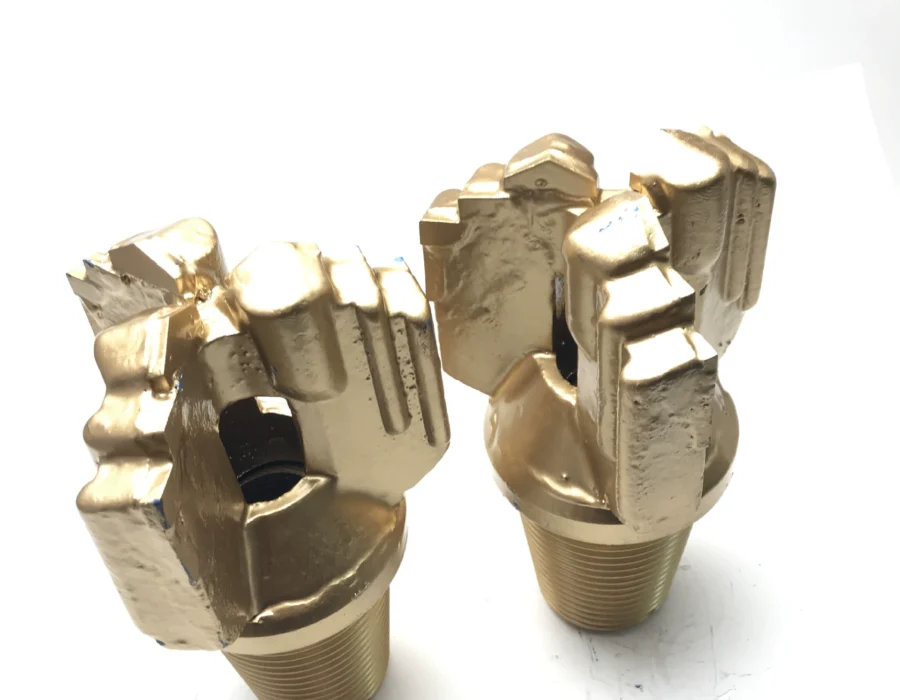
Soft formation below 4,000 psi includes clay, shale, and unconsolidated sand, but those rocks do not drill alike. PDC, milled-tooth tricone, and drag structures can all fit selected soft intervals. Choose by material behavior, preserve face cleaning, and treat gravel as a separate restriction rather than extending a sand recommendation without evidence.
What makes a formation soft at the bit face?
The approved strength boundary places Soft formation below 4,000 psi UCS. Clay, shale, and unconsolidated sand are the named examples. UCS establishes a strength class, but the cutting response still depends on how the material reaches the face. Clay can adhere to blades and cutters. Shale may shear efficiently yet pack when fragments are not removed. Uncemented sand can move around the body instead of presenting a stable surface. Those differences should be written into the bit plan rather than compressed into one generic label.
Three cutting routes are available. PDC is compatible with Soft formation and offers a shearing structure for oil, gas, offshore, or directional work. Milled-tooth tricone codes 111, 121, and 131 are the Soft choices when rolling contact is preferred. Drag bits also fit Soft–Medium service and are especially relevant to soft or unconsolidated ground. The 160 mm three-blade PDC product and 75 mm three-wing drag product let a reviewer compare fixed-cutter mechanisms without assuming they share one operating window.
How should cutting structure follow clay, shale, or sand?
Clay and sticky shale put cleaning ahead of raw loading. A PDC face can shear these materials, but packed cuttings reduce fresh-rock contact and raise torque. A drag profile can also scrape soft ground effectively, provided the blades remain exposed. The limitation is direct: neither a clean clay response nor a low UCS value proves suitability for gravel. Mobile hard clasts can interrupt shearing, strike exposed cutters, or lodge beside a fixed blade.
Milled teeth provide a different contact pattern. IADC 111, 121, or 131 identifies a tricone structure intended for Soft rock. Rolling cones can tolerate changes in contact better than a fixed blade in some mixed soft intervals, although the selected code still must match the actual product. Do not move to a Medium insert code simply because penetration falls. First determine whether balling, poor removal, or an unexpected stronger bed caused the change.
| Soft-ground route | Approved formation or code | Mechanical reference | Hydraulic boundary |
|---|---|---|---|
| PDC | Soft; M323, M332, M433, or S323 when verified | 2,000–10,000 lbf/in; 60–300 RPM | 250–650 gpm only for an 8.5-inch-class hole |
| Milled-tooth tricone | Soft; IADC 111, 121, or 131 | 3,000–8,000 lbf/in; 60–120 RPM | No tricone flow figure is supplied |
| Drag | Soft–Medium; suited to Soft or Unconsolidated ground | Low WOB; 100–250 RPM | No numerical flow value is supplied |
Operating envelopes and cleaning controls
The PDC envelope is 2,000–10,000 lbf/in of bit diameter with 60–300 RPM. Only the 8.5-inch-class PDC case carries a circulation range: 250–650 gpm. That flow number must not be copied to another diameter or another bit family. A useful adjustment sequence begins with steady returns and acceptable torque, then changes one mechanical input at a time. When sticky cuttings cover the face, more WOB can deepen the packing problem instead of restoring penetration.
Tricone operation is bounded by 3,000–8,000 lbf/in and 60–120 RPM. Drag operation uses low WOB and 100–250 RPM; “low” must stay qualitative because the fact set gives no numerical drag loading range. Across all three routes, surface returns provide the quickest check on cleaning. Cohesive lumps, recut fines, or intermittent sand slugs can each indicate a different transport problem, so the response should be interpreted with lithology and torque together.
Gauge condition deserves a separate entry even in low-strength rock. A packed face can stop effective cutting while the body remains full gauge, whereas hard gravel fragments can damage an outer cutter and reduce diameter locally. Inspect the perimeter, central structure, and flow passages as different zones. If a PDC or drag bit shows edge damage after a sand interval, look for gravel or a harder bed in the returns before attributing the condition to normal soft-rock wear.
How does the recommendation change by application?
Oil and gas or directional sections can favor PDC when the interval is clay or shale and the assembly can maintain stable shearing. Water-well work often gives drag or milled-tooth tricone a stronger role because loose sand and shallow soft beds may dominate the section. The water-well drilling application is therefore relevant even though the same Soft taxonomy is used. Application changes the rig system, bore-control requirement, and acceptable response; it does not alter the 4,000 psi boundary.
A directional run also places more weight on lateral stability. Sudden torque or cutter chipping in an interval logged as Soft can indicate a bed transition, gravel, or dysfunction rather than excessive formation strength. In a water well, the same return change may signal mobile alluvium and a wall-stability issue. In either setting, the bit cannot solve unsupported-hole behavior by itself. That restriction should appear in the drilling record before the run begins.
Which observations should trigger a review?
Balling, rising torque with falling advance, chipped fixed cutters, buried drag blades, and unexpectedly angular hard fragments all justify a pause. Match the symptom to the material. Clay adhesion points toward face cleaning; hard fragments may invalidate the assumed lithology; erratic cone loading can indicate a mixed interval. A Soft code is not permission to exceed the relevant WOB or RPM envelope.
Record the bit family, verified IADC code where applicable, connection, starting controls, returned lithology, and the depth at which behavior changed. General bit-mechanics terminology is available through PetroWiki, while classification context can be checked at IADC. The final choice still depends on the actual interval. Soft formation is a useful boundary, not a guarantee of easy drilling or stable ground.